Make the offer easy to try.
A bounded trial with clear scope. Agree on potential paid terms, attribution rules and marketing budgets before launch.
Low initial commitmentTillrise · Investor overview
Local businesses have already built the capacity. We’re building the AI growth operation that helps them put it to work—starting with independent nail salons.
Request the deckHelp owners grow into their existing staff and space, without buying their locations or employing their service teams.
Tillrise combines customer-facing software with managed acquisition and retention. The intended model earns from agreed, completed sales while leaving attractive economics for the owner.
The venture-scale opportunity depends on making that work repeatable: a common product, reliable onboarding and declining delivery effort per salon.
The establishment count excludes nonemployer businesses. It does not measure unused capacity, software adoption or Tillrise’s qualified market. Source: U.S. Census Bureau, 2023 CBP.
The proposed growth plan pairs software and managed execution with a share of eligible completed service sales. The fee is not yet fixed.
A bounded trial with clear scope. Agree on potential paid terms, attribution rules and marketing budgets before launch.
Low initial commitmentAccount for technician pay, supplies, campaign costs, refunds and Tillrise’s fee. Attribution alone does not establish incremental profit.
Owner contributionTrack onboarding and support hours alongside infrastructure and messaging costs. Automate the work that repeats.
Repeatable unit economicsPilots will determine the fee rate, eligible customer cohorts, fee duration and whether owners choose paid continuation. Financial scenarios in the deck are assumptions, not operating results.
Our thesis is not that salons lack software choices. It is that some owners need the growth work done for them—and measured against the capacity they can sell.
Engineering and founder-led selling first. A larger sales organization follows a repeatable offer.
Reliable workflows, real staff usage and a clean baseline for measuring additional business.
Test owner contribution, willingness to pay, onboarding effort and the cost of ongoing delivery beyond the first relationship.
A retained customer base and improving delivery margins. This is a target contingent on funding and pilot results—not a forecast or current pipeline.
Ian and Harrison were business partners at GoGogiri as it grew to three concurrent locations and 30+ employees.

Co-founder, Product & Technology
Product builder. Applied AI. GoGogiri operating partner.
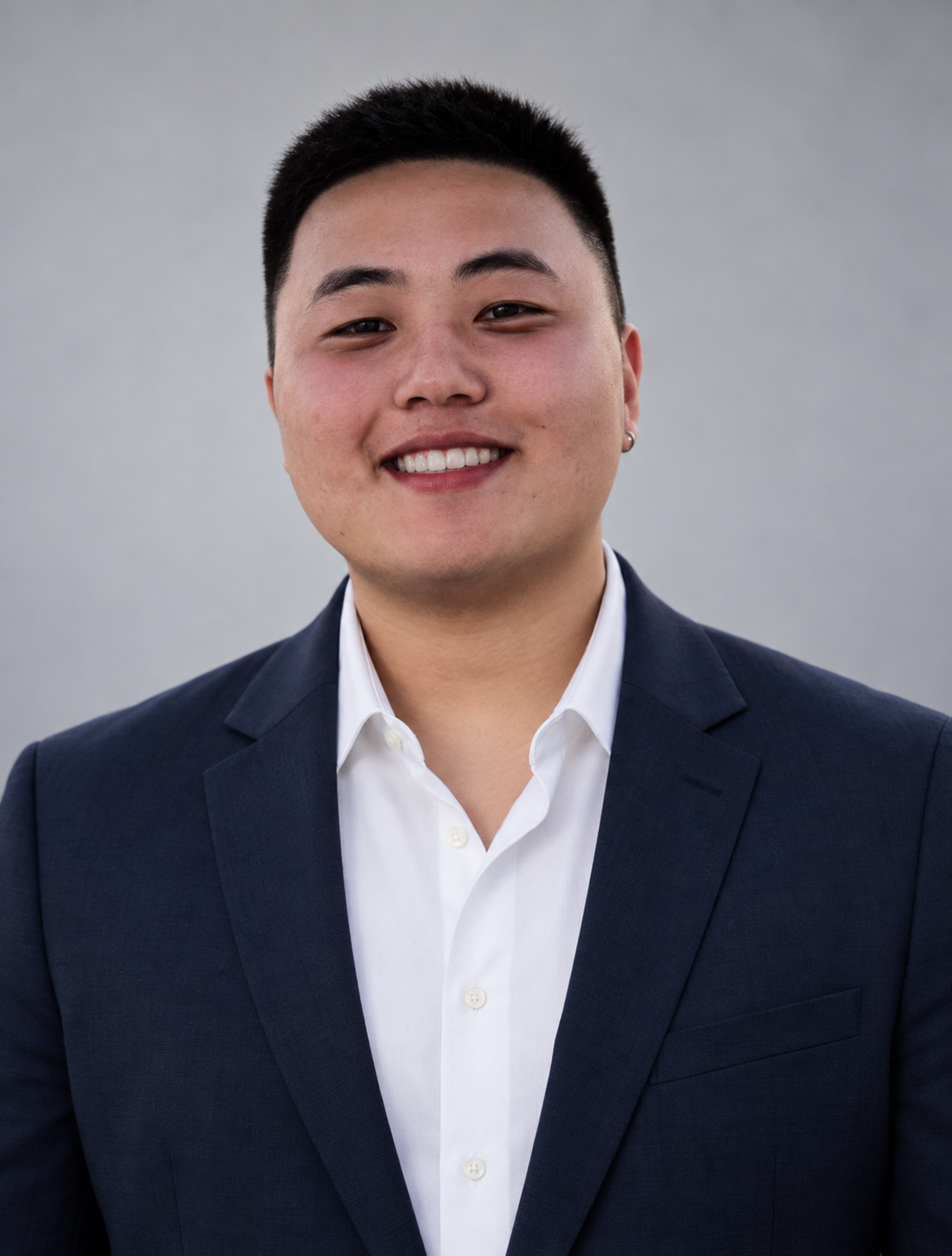
Co-founder, Sales & Growth
Salon acquisition. Owner relationships. GoGogiri operating partner.
Prior-business figures are founder-reported. Both founders’ full-time participation is planned upon funding; formation and employment terms remain open.
The long-term direction is an AI operator for local service businesses. Each expansion has to improve owner value—not just add a feature.
Discovery, conversion and retention tied to sellable appointment hours.
Permissioned AI actions, connected customer records and payments where they improve the operating loop.
Apply a proven playbook to other appointment-based services, with reliable operating records owners can use as they grow or prepare for a transition.
Long-term roadmap. MCP, embedded payments and business-transfer workflows are not presented as deployed products or established revenue streams.
The deck, the assumptions, and a conversation with the team.